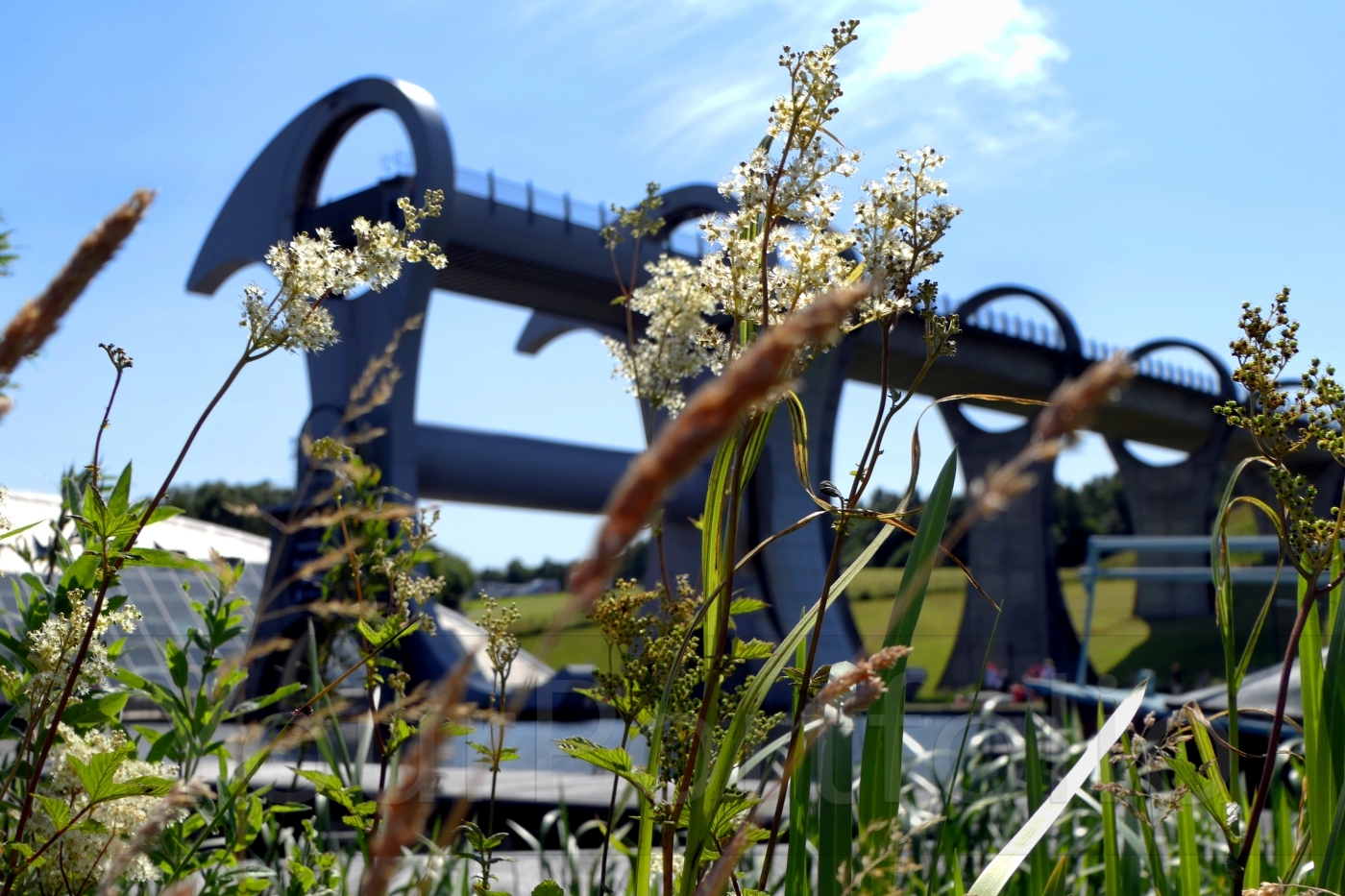
The Falkirk Wheel connects the Union Canal with the Forth and Clyde Canal. Previously they had been connected by a flight of eleven locks with a 35 metre height difference that required most of a day to navigate. With the decline in canal traffic as a result of competition from the railways these locks fell into disuse in the 1930s, and the Forth and Clyde Canal closed in 1962, followed a decade later by the Union Canal.
However, beginning in the 1980s there was increasing interest in using the canals for leisure purposes and gradually their fortunes revived, to the extent that there was renewed demand for them to connected.
The proposal for a boat lift connection was approved in 1999. It is one of only two boat lifts in the UK, the other being at Anderton in Cheshire, connecting the River Weaver with the Trent and Mersey Canal. This uses the most common design for boat lifts, the vertical caisson, with an inclined plane being the other most frequently used design. At 15 metres high this lift is smaller than the Falkirk lift, which raises boats by 24 metres, the remaining height differential being navigated by two locks.
Although relatively small by world standards (the largest, at Guizhou, China, is 127m and Europe’s largest at Le Rœulx in Belgium is 73m), the Falkirk Wheel’s unique rotary design makes it one of the most popular, and certainly the most elegant boat lift in the world.
The design of the wheel drew inspiration from a form of Celtic double-headed axe, known as a bearded axe, from a ship’s propeller, and from the ribs of a whale. It has been described as a “form of contemporary sculpture”. Construction began in 1999, and it opened just three years later.
The Falkirk Wheel

Uploaded 2026-09-02T14:09:17+00:00
views
comments

Creatives
Comment on this Image
Albums
IOTD Winners - 310 photos & videos
Scottish Lowlands - 11 photos & videos
Competitions Entered
Image of the Day
