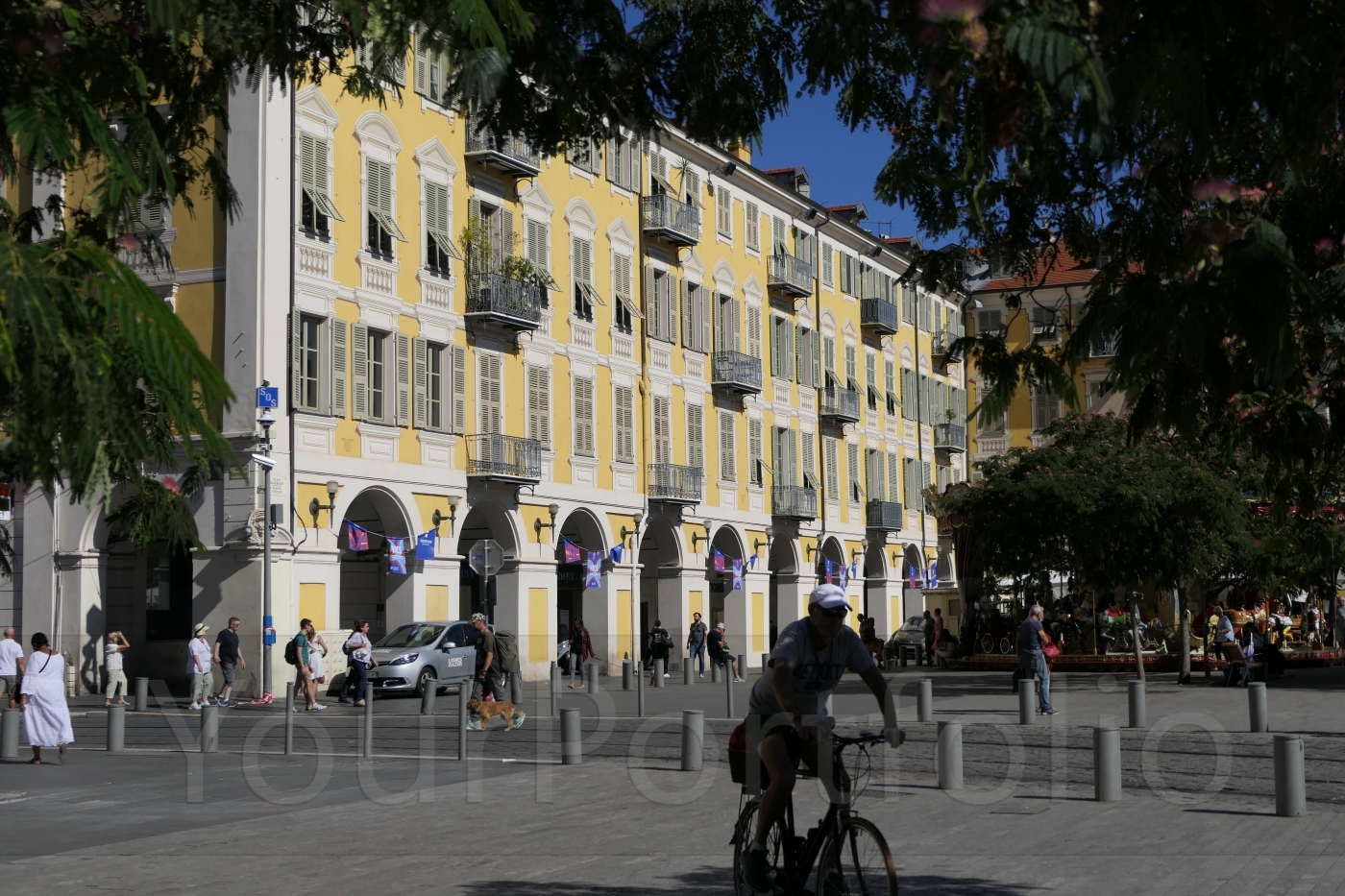
Why, you may be wondering, is the main square in the French city of Nice named after the great Italian patriot Giuseppe Garibaldi? The answer is simple. The city we know as Nice is really the Italian city of Nizza. Garibaldi was born in a house on the piazza that now bears his name in July 1807.
In the 7th Century Nizza joined the Genoese League, and remained part of that alliance until in 1388 it placed itself under the protection of the Duchy of Savoy. As the Italian state closest to France, Savoy was frequently invaded by the French whenever they attempted to intervene in Italian wars, always with the objective of their own territorial expansion.
In 1713 the Duke of Savoy became also King of Sicily, and later King of Sardinia. Nizza was then attacked and overrun in 1792 by the forces of the First French Republic, and held until 1814, when it reverted to the Kingdom of Piedmont-Sardinia.
In 1860, Nice was the price extracted from the nascent Italian government for French support in the Second Italian War of Independence against Austria. The cession was ratified by a plebiscite in April of that year; opponents called for a boycott, and so the majority of votes cast were in favour. Nevertheless, the French government rigged the result. In the village of Levens, for example, the 407 registered voters cast 481 votes, almost all in favour of the cession. The rest of Savoy was transferred to the French by similar means.
The French immediately abolished the use of the Italian language. Around a quarter of the population emigrated to nearby Ligurian towns. Nevertheless, the following year, pro-Italian parties won the majority of votes (26,534 of 29,428 cast), and Garibaldi was elected to the French National Assembly. The French sent 10,000 troops to Nice, closed all Italian newspapers, expelled all Italian intellectuals, refused to allow Garibaldi to address the National Assembly, and violently suppressed a three-day uprising.
The pro-Italian irridentist movement continued until 1914. To this day the local 'dialect' is obviously Italian, the cuisine is Italian, even the architecture is Italian. Nice's Italian roots run deep, and despite the Francization policies of the French government, have never been entirely eliminated.
Place Garibaldi

Uploaded 2025-09-16T11:23:18+00:00
views
comments

Creatives
Comment on this Image
Albums
IOTD Winners - 310 photos & videos
Provence and Le Côte d'Azur, France - 24 photos & videos
Competitions Entered
Image of the Day
